Mostrando entradas con la etiqueta custom. Mostrar todas las entradas

lunes, 30 de agosto de 2010

Gabriel Delta y su Genesis.

  
Gabriel Delta es uno de los mejores guitarristas de blues que ha dado la Argentina, y uno los pocos referentes del blues latinoamericano en la actualidad. Ha compartido escenario con infinidad luminarias del género, Inspirado por su héroe B.B King, a quien conoció en 1994, formo los “Delta Blues” banda con la que recorrió la Argentina. También toco con Vitico, Alejandro Medina y el reconocidísimo Botafogo.
En el 2000 nace el “Guitar Club” siendo el, uno de sus “socios fundadores” junto a otros grandes como Luis Salinas, Horacio Malvicino, Walter Malloseti, Marcelo Roascio, Miguel Botafogo Vilanova.
En el 2001 presentó en el Blues Festival de Chicago y su disco Póker de Ases recibió muy buenas criticas de músicos como John Paris, Billy Branch, Ronnie Backer Brooks, Shirlly Dixon, y del director de Alligator Récords Mr Bruce Illaguer, entre otros, la revista Blues Review lo catalogo como un “excelente guitarrista” es su paso por los EEUU y allí compartió el escenario con músicos de la talla de Larry Mc Cray, Buddy Guy Legend’s y Melvin Taylor.
Actualmente reside en Italia y rueda por los escenarios europeos con su banda
Gabriel Delta & and The Hurricanes.

Entrevista:

1 - Como conociste a tu Geni?

Cuando tenia 16 años el novio de una compañera de trabajo me pasaba algunas cosas para tocar en la guitarra, me daba algunos ejercicios, el tenia una Génesis, te estoy hablando del 1983/84, así fue como tuve el primer contacto con este instrumento. A los dos años me echaron del trabajo y con el dinero de la liquidación fui a una casa del centro de Buenos Aires (no hago publicidad) y me compré la Epiphone Génesis, prometiéndome ganarme la vida con esa guitarra. La compre usada y fue mi primera guitarra eléctrica, así que puedo decir que tengo una relación con ella casi visceral, aprendí todo tocando este instrumento y sigo aun hoy tocando por el mundo con “La Negra”. Cuando Pappo escribió Blues para mi Guitarra sentí esa canción como si fuera mía.

2 - que te parece el sonido?

Como sonido es potente y presente, yo le hice algunas modificas con el pasar del tiempo, por ejemplo anulé la llave que te da la posibilidad de convertir los pick-up en bobina simple, pues me gusta mucho su sonido usando los humbuckers. Tuve que cambiar el pick-up del mango porque el original se quemo no se como, así que le puse un Duncan 59 y entre los dos consigo un buen equilibrio timbrico. Para los solos uso el pick del puente que realza los medio/agudos que es el original.

3 - que te parece la calidad en gral del instrumento?

Mira a ser sincero creo que esta construida con criterio y con cuidado, el diapasón es sutil y muy cómodo, después si te pones a tocarla sin conectarla al amplificador te das cuenta de la calidad de la madera gracias al sonido que tiene, como volumen y sustain, creo que es uno de los mejores modos para entender como suena una guitarra. Después me gusta el modelo como forma y elegancia, hay que tener en cuenta que es una guitarra construida hace 30 años, donde las cosas se hacían con otros criterios y fue el modelo elegido y creado para relanzar una importante marca en el mercado, es ampliamente superior a muchos instrumentos de marca fabricados en serie en los últimos años, donde se paga más la marca que la calidad.

4 - que te parece el Hardware?

La calidad es muy buena, yo como te decía antes con el pasar de los años fui haciéndole algunas modificaciones, le puse el puente en hueso y cuando tuve que cambiar las clavijas le puse unas Schaller aumentando así la calidad en la prestación.

5 - que te parece en términos de comodidad para tocar?

Como diapasón es de una comodidad increíble, es muy sutil y largo, característica que hacen que la mano no se canse. Reconozco que el cuerpo es un poco pesado, pero es inevitable por el tipo de madera y lo macizo que es, lógicamente después de dos o tres horas que estas tocando se siente, pero el echo de que no sea perfecta es lo que hace a la Geni mas humana.

6 - Alguna vez tocaste con una Gibson Les Paul?

Si, si toque con diversos instrumentos y gracias a la colaboración que mantuve con la revista MusicShop por casi tres años tuve la posibilidad también de testear diversas guitarras y marcas.

7 - Te parece que son equiparables o comparables en materia de sonido o algun otro punto?

Creo que si tendría que definir a la Geni a alguien que no la conoce indudablemente la describiría emparentándola a la Gibson Les Paul o en ciertas características a la SG. Tanto para dar una idea porque las comparaciones son odiosas y no permiten ver la belleza y características de cada cosa. Porque si se quiere comparar tendríamos que pensar con cual instrumento, como te decía antes, si ves las guitarras que se fabrican actualmente en serie, son siempre la marca y el modelo pero en cuestión de calidad dejan mucho que desear. Repito las comparaciones son estupidas, te acordas cuando la gente discutía si era mejor Page o Blackmore, en tanto los otros perdían tiempo ellos seguían haciendo la historia del Rock en el mundo.

8 - Grabaste algun tema con la Geni?

Muchos, gran parte de mis discos están grabados con la Geni, sigo actualmente usándola en vivo y en estudio, es mi guitarra, la conozco demasiado, te cuento anécdotas de músicos que se mueren cuando la escuchan, vienen al escenario a ver que guitarra es, o cuando ven la tapa del disco te preguntan en seguida con que guitarra tocas, te hablo de gente como Robben Ford, Chris Duarte, Taj Mahal, Tom Principato y otros. La gente después de los conciertos viene siempre a preguntar que guitarra uso, me hablan de su sonido de la imagen, no la conocen y yo con mucha alegría les cuento la historia, creo que soy uno de los pocos que va en giro por el mundo con esta guitarra.


 Contanos en 3 o 4 líneas cuales son tus sensaciones al tocarla, que es lo que mas te gusta de ella y cuales son, en tus propias palabras, sus mejores cualidades.

No se, no es fácil describir lo que se siente, son muchos años, muchas experiencias, sabes yo crecí en una familia de gente de trabajo, gente humilde donde todo nos costaba mucho, cuando compre esta guitarra toque el cielo y prometí ganarme la vida con ella, hoy sigo llevando mi musica por el mundo, cada vez que salimos al escenario es un momento único e irrepetible, “la Negra” esta firmada por Pappo con un sacacorchos, tiene magia, tiene kilómetros, tiene conciertos, tiene alma y tiene gran parte de mi vida en ella.
Es que mi guitarra y yo tenemos una extraña relación.


Muchas gracias Sr Delta.

Este es  hermoso tema del Sr Delta grabado con su "Genesis Deluxe":

English Version (Automatic translate from the spanish version)

Mini Biography.
Gabriel Delta is one of the best blues guitar players who has given Argentina, and one of the few references of the Latin American blues today. He has shared the stage with many luminaries of the style, Inspired by his hero BB King, whom he met in 1994, formed the "Delta Blues" the band that toured Argentina. I also play with Vitico, Alejandro Medina and the acclaimed Miguel Botafogo.
In 2000 created the "Guitar Club" being one of its "founding partners" along with other greats like Luis Salinas, Horacio Malvicino, Walter Malloseti, Marcelo Roascio, Miguel Botafogo Vilanova.
In 2001 appeared at the Chicago Blues Festival and Poker Aces album received very good reviews of musicians like John Paris, Billy Branch, Ronnie Baker Brooks, Shirlly Dixon, and the director of Alligator Records  Mr Bruce Illagua , among others, Blues Review magazine called him "an excellent guitar player" is your step by the U.S. and there shared the stage with musicians like Larry Mc Cray, Buddy Guy's Legend and Melvin Taylor.
He currently resides in Italy and European scenarios wheel with his band
Gabriel and Delta & The Hurricanes.

Interview:

1 - How to know your Geni?
When I was 16 the boyfriend of a female colleague passed me a few things to play on the guitar, gave me some exercises, he had a Genesis, I'm talking about 1983-1984, so it was the first contact I had with this instrument. Two years later I was fired from work and the settlement money went to a house in downtown Buenos Aires (do not advertising) and I bought the Epiphone Genesis, vowing to make a living with that guitar. Buy it used and it was my first electric guitar, so I can say I have an almost visceral relationship with her, I learned everything I keep playing this instrument and even today the world playing with "La Negra." When Pappo Blues wrote for my guitar felt that song as mine.

2 - you think of the sound?
As sound is powerful and present, I did some modifications with the passage of time, such as canceled the key that gives you the possibility of converting the pick-up in single coil, because I love your sound using the humbuckers. I had to change the pick-up of the handle because the original was burned not like, so I put a Duncan 59 and the two get a good balance of sounds. To pick the single use of the bridge that enhances the medium / treble which is the original.

3 - seems you gral quality of the instrument?
Look to be honest I think it is built with care and discretion, the pitch is subtle and very comfortable, then if you get to play it without connecting to the amplifier you realize the quality of wood thanks to the sound that has, as volume and sustain, I think it is one of the best ways to understand how a guitar sounds. Then I like the model as a form and style, we must bear in mind that a guitar built 30 years ago, where things are made to other criteria and was the model chosen and created for launching a major brand in the market, is widely instruments than many mass-produced brand in recent years, where you pay more the mark of quality.

4 - you think of the Hardware?
The quality is very good, I like I said before with the passing of the years I was making some changes, I put the bridge in bone and when I had to change the plugs I put a Schaller increasing the quality of service.

5 - what you think in terms of comfort to play?
As pitch is unbelievable comfort is very subtle and long, a feature that makes the hand is not tired. I recognize that the body is a little heavy, but it is inevitable for the type of wood and solid it is, of course after two or three hours you're playing it feels, but the fact that it is not perfect is what makes the Geni more human.

6 - Have you ever play with a Gibson Les Paul?
Yes, if you touch with different instruments and thanks to the collaboration I had with MusicShop magazine for almost three years also had the opportunity to test various guitars and brands.

7 - Do you think that are similar or comparable in sound or some other point?
I think if would have to define the Geni someone who does not know her describe it wothout doubts  resembling a Gibson Les Paul or certain features to the SG. Whether to give an idea because comparisons are odious and not let you see the beauty and characteristics of each. Because if you think we should compare which instrument, as I said before, if you see the guitars are now produced in series, are always the make and model but in terms of quality left much to be desired. Again comparisons are stupid, do you remember when people argued whether it was better Page or Blackmore, while others lose time they were making history in the world of Rock.


8 - Record any song with the Geni?
Many, many of my discs are recorded with the Geni, I am currently using it in live and studio, is my guitar, I know too, I tell you stories of musicians who die when they hear, come on stage to see that guitar or when they see the album cover then they ask that you play guitar, I'm talking people like Robben Ford, Chris Duarte, Taj Mahal, Tom Principato, and others. People after the concerts is always asking to use guitar, tell me about your picture sound, and I do not know with great joy that I tell the story, I think I'm one of the few that goes around the world turn with this guitar.

9- Tell us in 3 or 4 lines are your feelings to the touch, which is what you like best about it and what, in your own words, his best qualities.

No, it is not easy to describe what it feels like, many years, many experiences, you know I grew up in a family of working people, humble people where everything cost us a lot, when you buy this guitar touch the sky and promised to make a living with it, today I carry my music around the world, every time we go on stage is a unique and unrepeatable, "the Black" is signed by Pappo with a corkscrew, has magic, has miles, has concerts, has a soul and has much of my life on it.
Is my guitar and I have a strange relationship.


Check the Genesis sound!!
A beautiful song of Mr Delta recorded with his Genesis Deluxe:
Link:Analia by Gabriel Delta

martes, 30 de marzo de 2010

The History of the Epiphone Genesis


The story of the Epiphone Genesis is full of mysteries, and perhaps that is just one of its charms. It has been much discussed where it was manufactured and what wood was used, what is not discussed, is its high quality, and for many people, no doubt,
it is the best solid body guitar Epiphone ever built.

The Epiphone Genesis was designed in 1978 by Jim Walker, Marketing Director of Gibson Guitar Corporation between 1977 and 1983.
He was one of the original builders of the first Hamer Guitars, pioneers in the world of Boutique Instruments  (Hamer was incredible high-end instruments completely handmade, before  the "Custom Shop" divisions of the big brands)

Walker was hired by Gibson to revitalize the Epiphone line.

The prototypes of the Genesis were built by J.W. himself with the help of his friend and mentor John Montgomery in the same basement workshop, where they built the legendary first  Hamer instruments, for renowned guitar players of bands such as Cheap Trick, Jethro Tull, The Police.
Like today, at that time, Epiphone belonged to Gibson and was become his"second brand", and its production line had moved to Japan,  they built only lower quality instruments (compared to the Gibson line) and during the first half of the 70s, the Epiphone products had lost prestige and sales.

Norlin/Gibson executives wanted to "boost" the Epiphone line and reevaluate the brand to reposition it as a manufacturer of high-quality instruments, and for that, they needed a new "flagship"

That was Jim Walker's mission, and the Gibson design team provided the necessary support to carry out the project.
Walker works very close with Bruce Bolen ( Head of  Gibson R&D Department) and they shared a great friendship,  Bolen supervised and collaborated in
the planning, design, and production of the Genesis.

This is how the Genesis was born, as a new "beginning" for Epiphone,  and hence its name.
They decided to build a real quality guitar, powerful and versatile, that would remain in history and put Epiphone back into the big ones. 
First 3 Prototypes

The prototypes were rendered at the Gibson Kalamazoo plant, and then the "blueprints" were sent to Japan to the founder and head of Aria,  Shiro Arai  (at that time in Japan the cost of labor was half, but it was exceptionally high quality, even better than in the U.S.)
Arai built in Japan a very small series of Genesis identical to the prototypes built by Walker in the U.S 
The Genesis was built at the peak of the "Golden Age" of the Japanese Replicas, today knows as "Lawsuits" like Greco, Aria, Burny, and Tokai.

1979 Japan Catalog


Even though the original idea was producing the Genesis in Japan, the turbulent Yen/Dollar exchange rate at the time, the mass production was made on the Pearl Drums plant in Taiwan.
The mass "Production Units" built by Pearl and sold worldwide are slightly different from the prototypes built by Walker and  Arai.
The production Genesis came with "exposed" pickups (without cover) and  "Speed" style knobs.


The original prototypes and those built by Aria in Japan came with Covered Pickups end Top Hut style knobs.
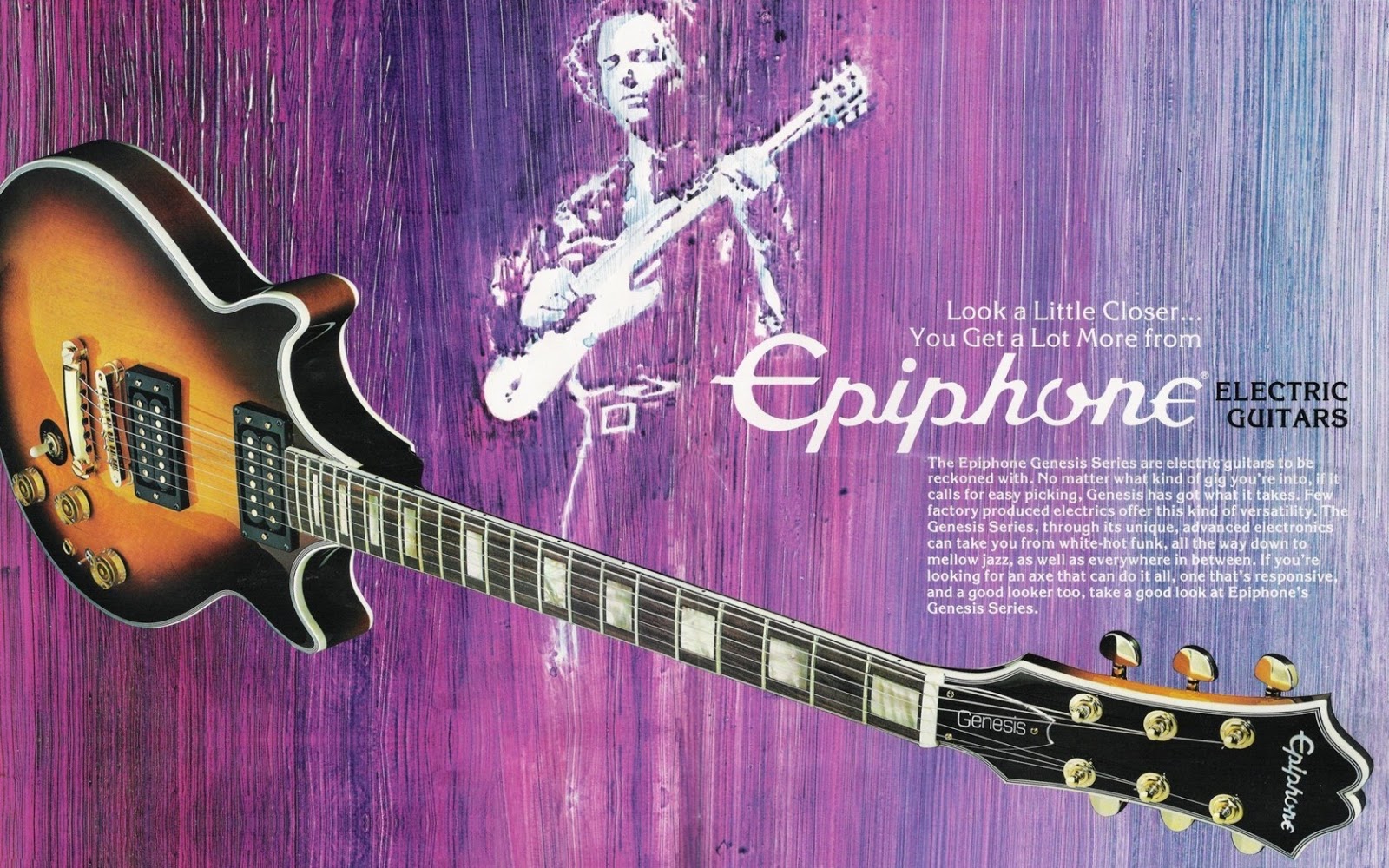
1979 Japan Poster advertises

  The  Genesis is an electric guitar with an excellent construction,  finish and sound quality, which can be used for the most diverse styles from Jazz  to Rock or Metal.

It is a  very solid axe, about 10 pounds (4.5 kg)   similar to Les Paul Gibson of that times,  with a powerful warm full-bodied sound with an extraordinary sustain,  attributes that have made it stand out over the years, and little by little they are giving a solid reputation.


Models and Features:
           Genesis Series had 3 different models:
Standard   -   Deluxe   -   Custom


Specs by model. (Pearl  production units)

-"Standard"(Entry-level)
Simple binding  on top, dot markers on the fingerboard, Chrome Hardware
exposed pickups, black "Speed" knobs
                                                                             
1980  Standard (Wine Red)


-"DeLuxe"(mid-level)
Double Binding on top, Simple binding on the back of the body and the headstock
trapezoidal Inlays and chrome hardware.
Exposed pickups, golden "Speed" knobs
Chrome Hardware
                                                                           
1980 Deluxe (Sunburst)

-"Custom" (high end)
Triple binding on the body top, double binding on the back and  the headstock and
simple binding on the sides of the fretboard with "nibs"
Abalone "Block"  Inlays
Exposed pickups, golden "Speed" knobs
Gold Hardware
                                                                       
1980 Custom (Sunburst)

Construction:

Mahogany Body and Neck with Carved Top,
Epiphone "Vintage"  headstock
3+3 Gotoh tuners.

Design Highlights


Double Cutway,
the neck joins to the body  on 19th fret
that's made easier access to upper tones on the last frets
(a nice advantage over the Les Paul) this design gives a lot of playability like an SG


Another nice option is 
Coil-tap Switch
which "turns" the humbuckers into a "single-coil",
something quite new at that time in the Gibson brands family
this feature gives to the guitar  a very nice crystal cleans sounds, improving versatility
 (another key advantage over the normal  Les Paul)
in other words, the Genesis  is a Les Paul with some "improvements"


Neck
One of the most lauded "virtues" of Genesis is his neck
Long and thick
59 style profile.
With a Vintage Epiphone elongated Headstock which contributes greatly to its renowned Sustain
Mahogany with Rosewood fingerboard with binding
1 - 11/16" at fingerboard nut
Fully adjustable truss rod
24 - 3/4" scale
22 frets


Pickups:
The Genesis  had 2 powerfull  humbuckers probably built by Maxon,  supplier of pickups for Aria, Greco, and Ibanez, at this times,   builders of the amazing  "Super 58" (and the Tubescreamer Overdrive Pedal)
There is no record of what type of magnet they have, but it is very possible that it is Alnico V
because they have more output than the vintage PAF.
The information on the catalogs is that the magnets emphasize the mid-range and treble, but that due to their composition, they also deliver a good low end, end they are made an alloy of  Iron, Aluminum, Nickel, and Copper.


 "Tune-o-Matic" bridge,  ABR-1 type like de 50s Gibson

2 volume controls and
1 master tone control.
   
The Genesis came in 3 colors:
Wine Red - Black - Sunburst


Sunburts had 2 options
Dark Sunburst - Sunburst 


The guitar was manufactured for 3 years. 1979-1980 and 1981.
The volatility of the Yen significantly increased the production costs of the Genesis making it impossible to maintain the Retail Price and was discontinued.
The Yen crisis not only hurt Genesis but also ended the "Golden Age" of the Japanese Replicas known as "Lawsuits" Aria, Burny, Greco and Tocai.

The Epiphone Genesis has passed the test of time and over the years it has become a "cult" guitar. Unlike other instruments its reputation has not been built through marketing or for having been used by some Guitar Hero, but was Growing through time, from below, The Genesis went from being a virtually unknown guitar to being an instrument sought and valued for its solid construction, great tone, and deep sustain.


Genesis Custom Sound Review


Check the Jim Walker¨s  Interview for more info

Link:  knowing-creator-interview-to-jim-walker


Double Binding  headstock (Custom)


 3 layers  Fretboard Binding with "nibs"

Triple binding on the top (Custom)


Catalog Images


Click on the images to full size


1979 Genesis Japan catalog (front &back)

1979 Genesis Japan catalog (interior)


Check this threads of  MyLesPaul Forum (the number 1 Guitar forum of the world)

jueves, 25 de marzo de 2010

Historia Epiphone Genesis


Poster Japon 1979

La Historia de la Epiphone Génesis está llena de misterios y tal vez sea ese uno más de sus encantos.
Mucho se discutió acerca de donde eran fabricadas y con qué maderas fueron construidas, lo que no tiene discusión es su gran calidad y sonido, y para muchos es sin duda, la mejor guitarra “Solid-body” que construyó Epiphone.

La Epiphone Génesis fue diseñada por Jim Walker,  Director de Marketing de Gibson Guitar Corporation entre 1977 y 1983, quien estaba a cargo del departamento de diseño de Epiphone,  esta Guitarra fue creada con el fin de "revalorizar"  la marca Epiphone y reposicionarla como fabricante de instrumentos de alta calidad.  
Epiphone pertenecía a Gibson desde finales de los 60 y se había convertido en  su "segunda marca",  por lo que construía instrumentos de una calidad menor a los de la firma Gibson, por lo que su reputación y sus ventas habían caído fuertemente.

Por este motivo Gibson decide darle un nuevo impulso a la firma Epiphone, contratando a Jim Walker quien venía de la marca sensación del momento HAMER Guitars, pionera de las guitarras "boutique" y antes que Fender y Gibson a crearan sus divisones Custom Shop

Así es como nace la Génesis, como un "nuevo comienzo" para la marca Epiphone y de ahí su nombre.
Según J. Walker la idea era construir una guitarra de calidad, potente y versátil, que quedara en la historia y pusiera de vuelta a Epiphone entre las grandes.


Publicidad  U.S.A


La Epiphone Génesis es una guitarra eléctrica de cuerpo sólido de excelente calidad de sonido y construcción, que puede ser utilizada para los más diversos estilos (desde el Jazz hasta el rock más extremo) está hecha con maderas nobles  y cuenta con un extraordinario sustain .  

Los primeros prototipos fueron construidos a mano por Walker en USA, estos fueron renderizados por los ingenieros de Gibson en la planta de Kalamazoo, y luego se enviaron los planos a  Japón  a  Shiro Arai, fundador de Aria, (en ese momento la mano de obra en Japón  era de una calidad excepcional hasta incluso mejor que en USA y costaba la mitad) 
Arai  estuvo a cargo de la construcción de una serie de prototipos,  los cuales muy probablemente fueron hechos en la planta Matsumoku,  ya que en ese momento esta planta producía guitarras  tanto Epiphone como Aria. 


Producción Masiva.  
Si bien la idea original era producir la Génesis en Japón a finales de 1979 Pearl Drums, (Firma que también pertenecía a Gibson) inauguraba una mega-planta con Tecnología de Punta Japonesa en Taiwán,  lo que permitía producir la guitarra con los mismos materiales pero a menor costo, por este motivo decidieron mover la producción en masa a la planta de la reconocida marca de baterías.


Construcción:

La Génesis está construida con Cuerpo y Mástil de Caoba, (asiática)   
Diapasón de Rosewood y clavijero Epiphone Vintage en configuración  3+3 
con Clavijas  Gotoh, 
Los micrófonos Humbuckers son más potentes que un Paf tradicional y eran fabricados  por  la firma Maxon, empresa que fabricaba mics para Aria, Greco e Ibanez (Súper 58 / Tubescreamer)
 Puente Tune-o-Matic ABR-1 como las viejas Gibson de los 50s
2 controles de volumen y 1 control maestro de tono.

Destacan en su diseño el "Doble Cutway" bien profundo que facilita el acceso a los últimos trastes
El cuerpo se une al mástil en el traste 19  (una gran ventaja sobre la Les Paúl)
 también cuenta con un pequeño switch  "Split Coil " que convierte los micrófonos doble bobina en simples dándole así un sonido más limpio y cristalino (otra ventaja fundamental sobre la Les Paúl) 
En otras palabras, se podría decir que es una Les Paúl con “pequeñas mejoras”

Es una guitarra pesada, de aproximadamente  4.5  Kg  al igual que las  Les Paul Gibson de la época, pero recompensa ese peso con tono.
La Génesis se caracteriza por tener un sonido cálido y potente con mucho cuerpo,  un  Low End profundo,  agudos dulces y  un extraordinario sustain.


Modelos y Características:
La Serie Génesis contaba con 3 modelos. 
                    Standard - Deluxe - Custom


-Standard (gama base)
Binding simple en la tapa, 
Marcadores Dot (puntos) en la trastera  
Hardware Cromo

-DeLuxe (gama media)
Binding simple en el Diapasón y Clavijero, 
Doble Binding en la parte delantera y trasera , 
Marcadores Trapezoidales en la trastera
Hardware Cromo

-Custom (Tope de Gama)
Binding simple en el diapasón, 
Doble Binding en el clavijero
Triple Binding en la parte delantera y trasera del Cuerpo
Marcadores rectangulares tipo Block de  Nácar/Abalone
Logo Epiphone de Nácar/Abalone
Hardware Dorado  

*Las versiones de producción (Taiwán) venían con Humbuckers descubiertos y perillas tipo Speed


La versión Japonesa (1979) en cambio 
tenia humbuckers "Cubiertos"y perillas "Top Hut" 


Imagen Catalogo Japones 1979


La Epiphone Génesis venía en tres colores:
Cherry, Negro y Sunburst 
El Sunburst tenía 2 variantes, DarkSunburst  y Cherry/tobacco Sunburst


La guitarra se fabrico durante 3 años. 1979-1980 y 1981. 
La volatilidad de precio del Yen por esos años incrementaron notablemente los costes de producción de la Génesis  haciendo imposible mantener el precio de venta y fue descontinuada. 
Esta crisis del Yen no solo perjudico a la Génesis, sino que también puso fin a la "Era dorada" de las Replicas Japonesas conocidas como "Lawsuits"   Aria,  Burny, Greco y Tocai.

La Epiphone Génesis ha pasado la prueba del tiempo y con los años se ha convertido en una guitarra de culto, a diferencia de otras guitarras su reputación no se ha construido a través del marketing o por haber sido usada por algún Guitar Hero, sino que fue creciendo a través del tiempo, de boca en boca, desde abajo, La Génesis paso de ser una guitarra virtualmente desconocida  a ser  un instrumento buscado y valorado por su construcción solida, gran tono y profundo sustain.


Hoy por hoy Epiphone solo produce instrumentos de calidad media/baja   y sigue bajo la sombra de Gibson  produciendo modelos "copia" o "replicas" de los modelos Gibson pero inferiores en cuanto a calidad y precio, instrumentos que están orientados a un público de principiantes y/o amateurs,  muy lejos en calidad a las gloriosas Génesis de antaño, tal vez algún día vuelvan las buenas épocas y vuelvan a producir guitarras de calidad como Epiphone supo hacer

********************************************************************

Fotos Catalogo 1979

                                             
Lista de especificaciones del Catalogo 1979


Video Test Review  (HQ audio)


 Mira las Reviews de esta guitarra en las pestañas   REVIEWS  u  OPINIONES